


Hit Enter to Search or X to close
The Mets’ Biggest What If: How Different Baseball Looks If David Wright Never Got Hurt
David Wright was everything the Mets hoped for when they called him up in 2004, a franchise cornerstone who quickly became one of the best third basemen in baseball. But just as he reached the heart of his prime, spinal stenosis derailed his career. What would his legacy look like if injuries never got in the way? We break down one of the biggest “what if” careers in modern baseball.
.png)
The Mets’ Biggest What If: How Different Baseball Looks If David Wright Never Got Hurt
David Wright was a highly regarded top prospect when the New York Mets called him up in July 2004.
He was ranked among the best prospects in the organization, widely praised as one of the purest hitters from the 2001 draft, and quickly developed into a standout third baseman with real power and polish at the plate.
Over the next decade, he became everything a franchise could ask for.
An All-Star.
A Gold Glover.
A middle-of-the-order bat.
The captain of the New York Mets.
And then, just as he hit what should have been the heart of his prime… his spine quit on him.
Which brings us to one of the biggest what-ifs in modern baseball.
What if David Wright never got hurt?
Story Breakdown
From the mid-2000s through the early 2010s, David Wright was one of the best third basemen in baseball.
Not just good. Not just a Mets fan favorite.
One of the best in the sport.
Across 14 seasons in New York, Wright hit .296 with a .376 on-base percentage and a .491 slugging percentage. He finished with 242 home runs, 970 RBIs, and nearly 200 stolen bases while playing 1,585 games.
He made seven All-Star teams, won two Gold Gloves and two Silver Sluggers, and for years sat firmly in the middle of MVP conversations.
Inside the Mets record books, his name is everywhere.
Hits.
Runs.
RBIs.
Doubles.
Total bases.
Extra-base hits.
For almost a decade, if you looked up the franchise leader in something offensive, chances were David Wright was either first or close to it.
And the consistency was ridiculous.
You could almost set your watch by his seasons.
Around 25 home runs.
40 doubles.
An OPS pushing .900.
Plus defense at third base.
Automatic production from a cornerstone player.
Until it suddenly wasn’t.
Reaction & Commentary
The turning point came quietly.
In 2011, Wright suffered a stress fracture in his lower back. At the time it felt like one of those annoying injuries players deal with and eventually move past.
And for a moment, it looked like he had.
In 2012, Wright reminded everyone exactly how good he was when healthy. He played 156 games, hit over .300, got on base nearly 40 percent of the time, and finished sixth in the National League MVP voting.
Classic David Wright season.
But the cracks were forming underneath.
By 2013 and 2014, leg issues started piling up. Hamstrings, lower-body problems, things that hinted something deeper might be going on.
Then came 2015.
Early that season Wright strained his hamstring. During rehab, the pain in his back got worse. Doctors eventually diagnosed him with spinal stenosis, a condition where the spinal canal narrows and begins compressing nerves.
For a baseball player, that’s brutal.
For a third baseman who lives in a crouch and generates power through constant rotation, it’s devastating.
From that point on, just getting on the field became a full-time job.
His pregame routine reportedly took hours. Treatment, stretching, activation work, just to move well enough to take ground balls and swing a bat.
And the games disappeared quickly.
He played just 38 games in 2015.
37 games in 2016 after neck surgery.
Then came shoulder problems, more back issues, and more comeback attempts that never quite held.
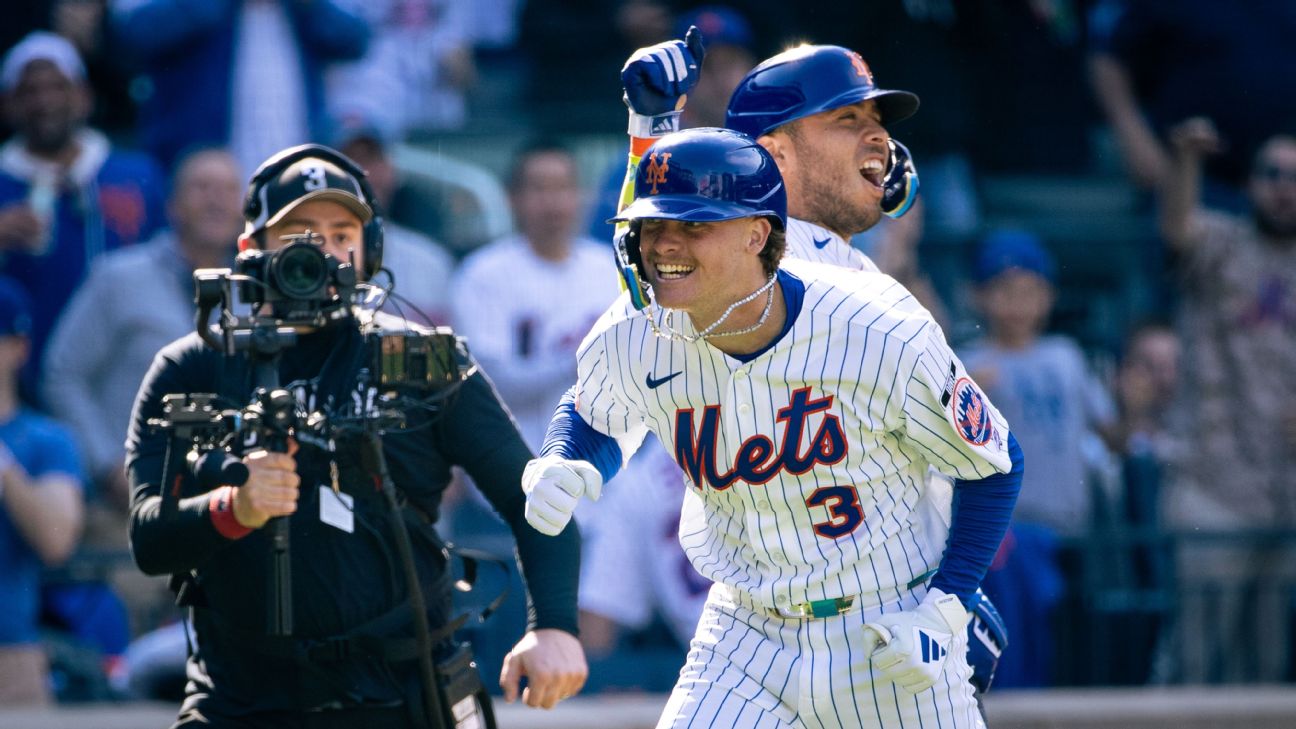
By 2018, the Mets activated Wright for one final game at Citi Field.
The crowd went insane.
It felt less like a regular-season game and more like a farewell ceremony.
Because everyone knew what it was.
The end.
Final Take
And that’s what makes the David Wright story one of baseball’s most fascinating what-ifs.
Because his career wasn’t derailed by declining skills.
His approach didn’t disappear.
His power didn’t suddenly vanish.
His spine just stopped cooperating.
If Wright follows a normal aging curve instead of a catastrophic one, the numbers look completely different.
Instead of finishing with 1,777 hits and 242 home runs, he likely cruises past 2,000 hits and clears 300 home runs.
Instead of hovering around 50 career WAR, he probably lands somewhere in the 60-plus range.
That’s not just “great Mets player” territory.
That’s Cooperstown territory.
Instead of debating whether injuries robbed him of a Hall of Fame case, we might be talking about where he ranks among the best third basemen of his era.
But baseball doesn’t run on alternate timelines.
The reality is we got a shorter version of David Wright’s career than anyone wanted.
Still, even with the injuries, he remains the Mets’ captain, the franchise leader in nearly everything that matters, and one of the most beloved players the organization has ever had.
The Hall of Fame numbers might be the what-if.
The legacy isn’t.

.svg)





Get weekly updates
*We’ll never share your details.
Follow us — @baseballauthority







Join Our Newsletter
Get a weekly selection of curated articles from our editorial team.